Most designers hear "trauma-informed" and picture something extreme. Crisis hotlines. Domestic violence shelters. Situations far removed from their day-to-day work.
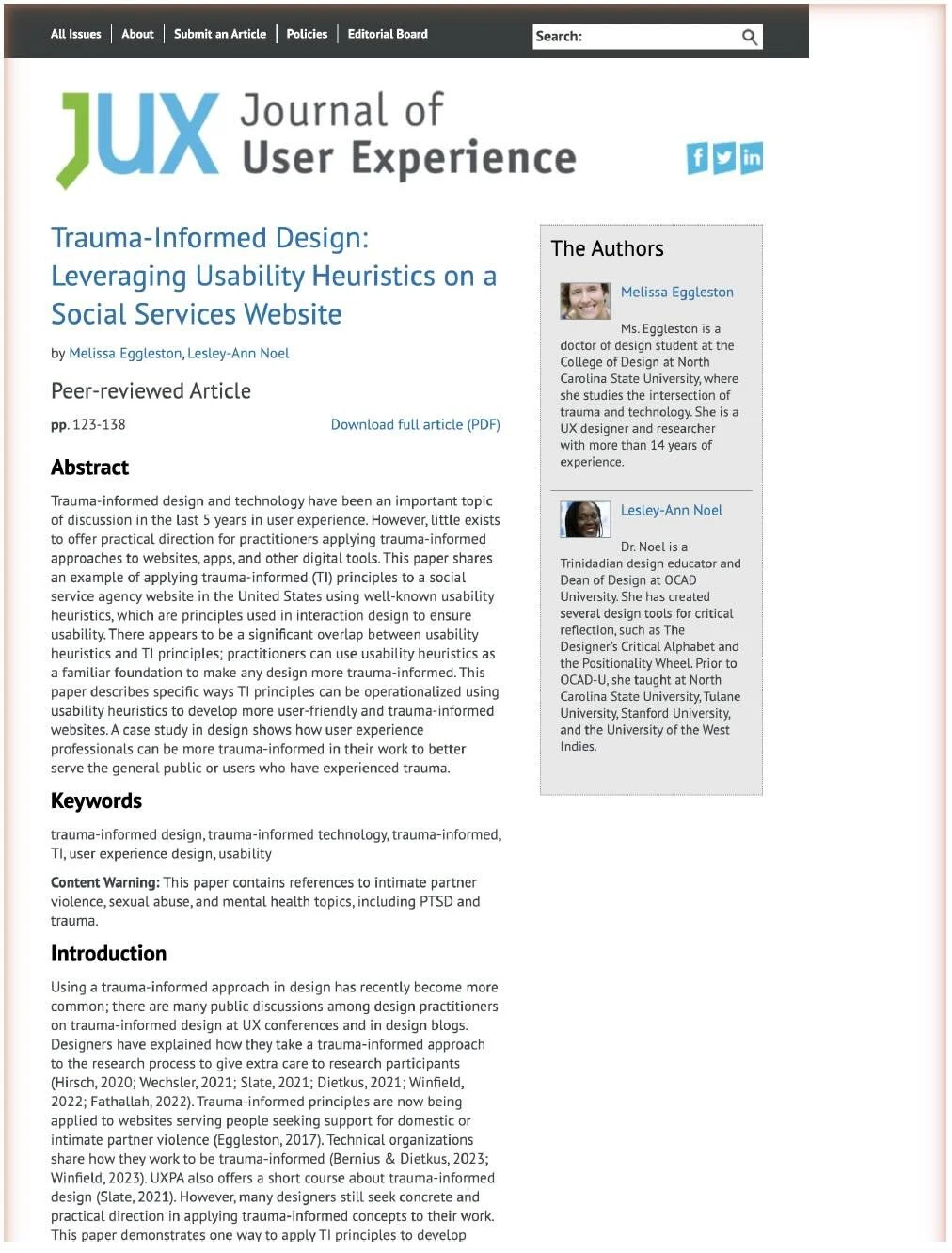
Here's the thing. Trauma is part of the human experience. And if you're designing for humans, trauma-informed design is already your job. You might just be doing it somewhat already. I co-authored a research article in the Journal of User Experience with Dr. Lesley-Ann Noel about this.
In 2016 (feels like a lifetime ago!) I looked at a website of a domestic violence services organization with my friend Elizabeth Johnson (book forthcoming, will likely be fabulous). We both had a similar reaction: this website is a problem. She was like, “This isn’t trauma-informed.” I was like, “This is bad design.”
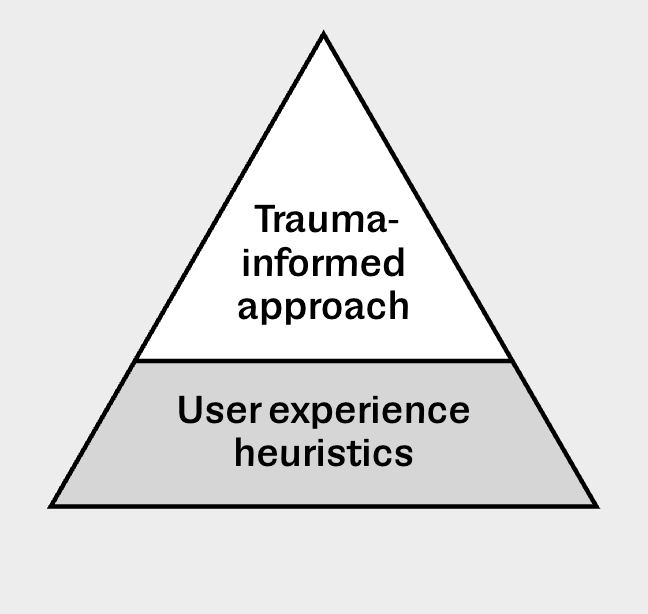
I then asked a simple question. What happens when you apply the usability heuristics you already know? Would that make a website more trauma-informed?
Short answer? Yes.
What We Actually Did
In 2017, my friend and I won an Aquent Design for Good grant to improve the website of a statewide social services agency that helped other agencies work more effectively with survivors. We had $5,000 and about two months.
We used SAMHSA's six trauma-informed principles as our guide: safety, trustworthiness, peer support, collaboration, empowerment, and cultural awareness. Then we mapped those against Jakob Nielsen's usability heuristics. Y'all know the ones. Consistency, error prevention, recognition over recall.
The overlap surprised us. Not that it existed, but how much of it there was.
Good Usability Is A Trauma-Informed START
This is the part that matters for your work right now.
When you design for consistency and predictability, you're also building trustworthiness. When you write in plain language instead of jargon, you're reducing cognitive load for everyone. That includes people whose brains are already working overtime because of trauma. When you give people clear choices and let them control their experience, you're supporting empowerment.
You don't need a social work degree to do this. Nobody should be gatekeeping trauma-informed work behind a specific credential. You need to care about the humans using your product. And you need to apply the design principles you already have with more intention.
What This Looked Like on the Ground
Here's what we changed on that website and why it mattered:
Made phone numbers clickable on mobile. Survivors need safety and privacy. A click-to-call number means they can reach the national hotline fast, without writing anything down. That's recognition over recall (usability) and safety (TI) working together.
Reduced the reading level. Some text was written at a college level. Trauma affects memory, attention, and decision-making. Dense text is a real barrier. That maps to matching the system with the real world (usability) and collaboration and mutuality (TI).
Added a search box. The site didn't have one. Some people browse. Some people search. Giving people both options is flexibility (usability) and empowerment, voice, and choice (TI).
Simplified the safety warning. The original overlay was long and required scrolling. We shortened it to the essentials: be safe and here's how to leave this site quickly. Less scrolling. More control.
Fixed broken links. When someone in crisis clicks a link and it goes nowhere, that signals this place isn't reliable. This is both error prevention and trustworthiness.
Updated language and images to be inclusive. Intimate partner violence affects every group. Improving the language reflects considering cultural, historical, and gender issues.
Why This Matters Beyond Social Services
Some might read this and think, "I don't design for people who are assaulted or other social services, so this doesn't apply to me."
It does.
People experiencing trauma use banking apps. They file taxes. They shop for groceries online. They use your product. Trauma doesn't stay neatly inside the walls of a social services agency. Over 70% of people globally report at least one traumatic event in their lifetime. Some folks have way more trauma than that.
The beauty of this research is that it shows that you don't have to learn an entirely new framework. Usability heuristics are already a familiar foundation. You just need to apply them with more awareness of who your users really are and what they might be carrying with them when they land on your site.
So What's Your Next Step?
Take one screen from your current project. Run through the SAMHSA principles and ask yourself: Does this page feel safe? Trustworthy? Does it give people choices? Is the language accessible? What other usability heuristics can I apply to help make it more trauma-informed?
We’ve got work to do. The good news is you already have the skills to get started. Now use them with more intention and when you are ready, learn more.